I have been involved since childhood, but started on my own in 2016.
The first Oriental Shorthair
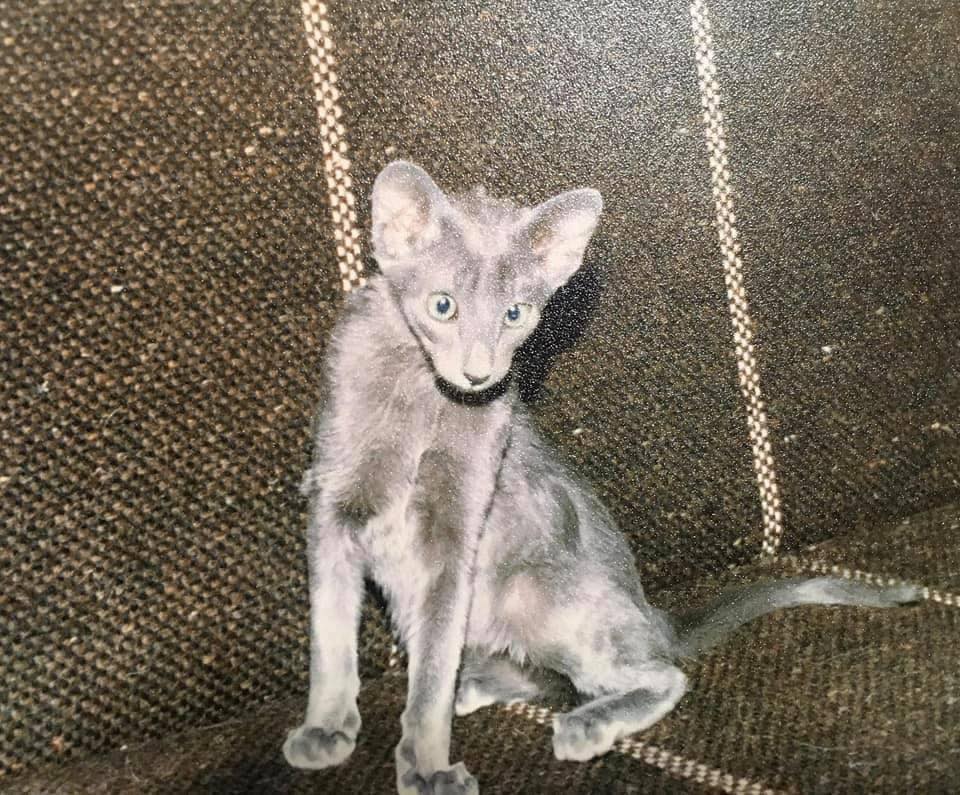
The family’s entry point was a Felitan kitten called Bluebell. She came home in 1979 and connected us to the people who would teach us the breed.
Bluebell brought Barbara and Dick Levitan into our lives. Barbara became my mother’s mentor; their family became our friends and show-benching partners. That relationship, more than any single show result, was the beginning of our life in the breed.
Bluebell’s individual adventures—the VW bus, the cowlick, the Springer Spaniel, and my first trip into a ring—belong to her own story.
Temeluphil
My mother, Dr. Janice Stalcup, R.N., M.S., Dr.P.H., founded Temeluphil Cattery. She began showing with Barbara Levitan of Felitan in 1979, and our first litter arrived in January 1980.
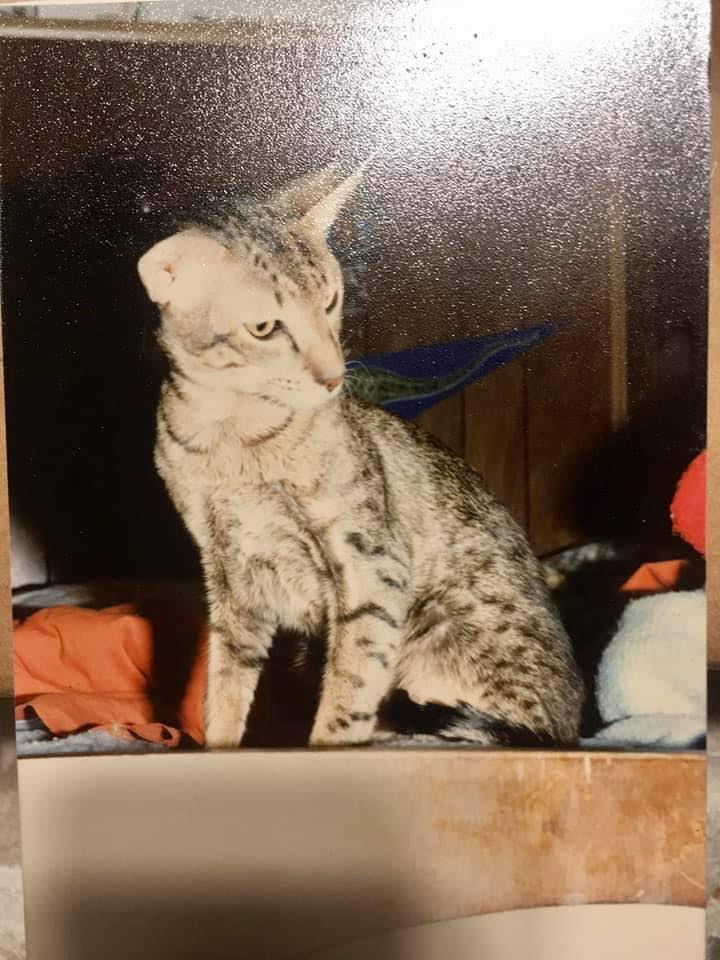
Brady and his sister, GC Temeluphil’s Alia of Earthsea, became early Grand Champions. Alia granded in two shows, but she was not a good mother and was spayed. Brady’s much more important qualification was staying beside me during long recoveries from eye surgery. His show career and his life as my best friend belong in his story.
Brady’s daughter, Temeluphil’s Argent of Glor-ee, became one of the earliest Distinguished Merit queens in the breed. It’s hard to find an Oriental Shorthair out there without some tiny piece of Brady in it.
Find something nice
Barbara also taught me the rule that outlasted every ribbon: find something nice about the cat or shut up. The lesson became my standard for sportsmanship and belongs in the essay devoted to it.
The return
I showed cats with my mother from 1979 to 1986, then restarted in 2016. I got back into showing with two premiers before adding intact cats.
After losing Amiga, Star, and Gumby in eighteen months, I spent most of 2017 without a cat. In October, Ollie and Dresden arrived together. I had no intention of returning to the show hall, but an invitation to bring Dresden to the CFA International turned into showing both of them. They became Grand Premiers.
Charm followed. Her first litter arrived in May 2019 and included Hobbes. That was the first litter I had taken part in since 1985 or 1986: the point where inherited memory became daily responsibility again.
Temeluphil was my mother’s cattery. UltraVires is mine. The continuity is not a claim that one registered cattery operated without interruption; it is continuity of breed memory, show experience, relationships, pedigrees, and a child’s education that followed him back into the ring as an adult.
A cattery does not exist alone
The history is not only Temeluphil and UltraVires. It includes the breeders who taught us, competed with us, exchanged cats, helped during emergencies, and kept lines alive: Felitan, San-Toi, Senrabe, Attack, Azorez, and others.
There are genuinely good people in the fancy. There always have been.
Preservation is not an abstract pedigree chart. Sometimes it is a breeder taking a queen, another breeder housing cats, somebody doing visa paperwork, somebody driving four hours with food, and somebody making sure that a person’s life in the breed does not vanish when the person can no longer carry it alone.
The photographs are part of the story. The memory is the institution.