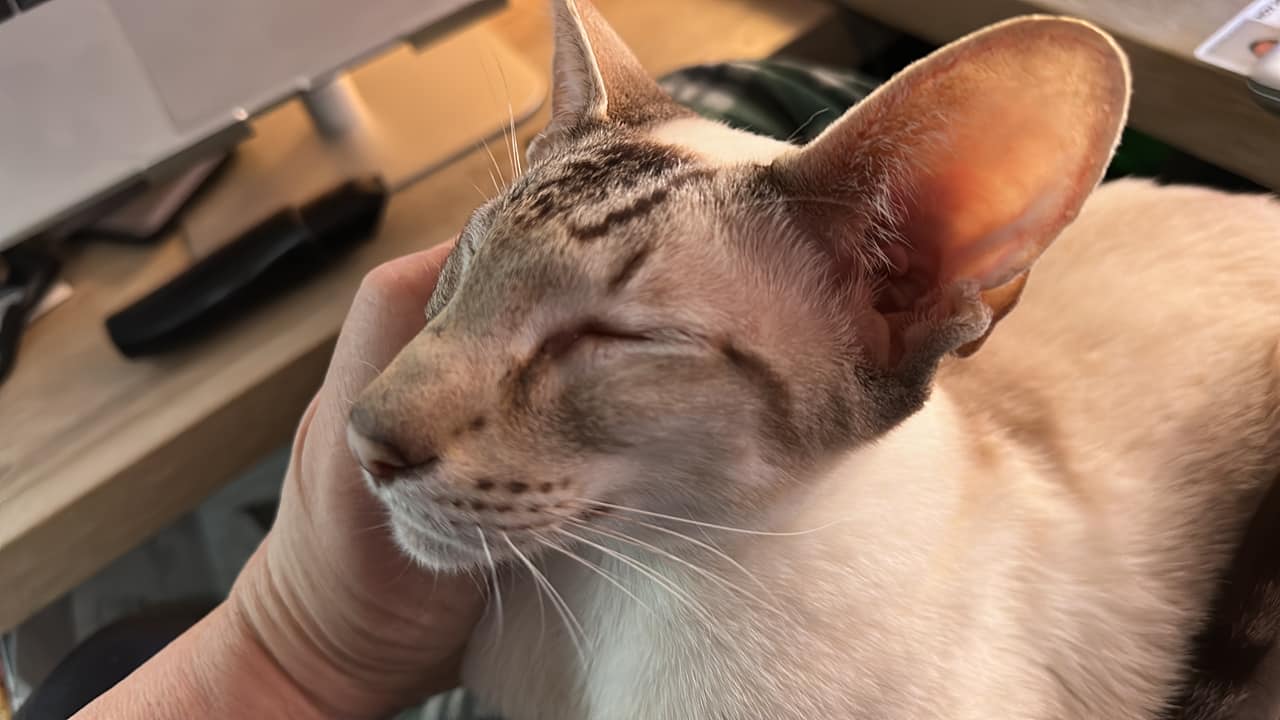
Reduce the bewildering experience of separating from littermates—they’re kind of over mom at 16 weeks—removal from their territory, and travel by limiting the new stimuli. The same goes for retirees; losing your social community is traumatic.
This sounds tedious, but really it’s just seven to ten days.
Prepare before the cat arrives
Set up the quiet room before departure. Have the familiar food and litter, water, a safe hiding place, the carrier and blanket, and the kitten’s records where you can find them. Know which veterinarian will see the kitten and how that office handles an urgent problem after hours.
Arrival day is not improved by discovering that the clinic you had in mind stopped accepting new patients eighteen months ago.
Start with one quiet room
Over and over and over breeders tell people: put the cat in a confined room with the blanket and carrier. Do not change the food or litter brands immediately. Provide clean water. Do not introduce other animals.
Yet I see people break those guidelines constantly, often after receiving the same instructions before the kitten left. Breeders talk. Yes, we remember.
The room is not punishment and it is not a test the kitten has to pass. It is a smaller world that can become legible before the rest of the house arrives all at once.
Be the furniture
Interact with the kitten in a low-key manner. Sit in the isolation room. Read a book. Play on your phone. Let the kitten come to you.
This means one or two quietly conversing people—not your orcish horde.
Never pick up a new kitten from above and behind; that’s how predators strike. Lower your hand to the kitten’s level from the front. Speak softly. If you’re a loud, twitchy person prone to sudden movements, then go get an aquarium because cats aren’t your thing.
Best of all, sit on the floor with your kitten. Lie on the floor. Be the furniture.
Make a common smell
Take a worn sweatshirt and wear it to the gym or sleep in it. Give it to the kitten as a bed. After a day, put it in your older cats’ spot. Get another sweatshirt.
Repeat for three or four days until the two sweatshirts are going back and forth. We are creating a common smell: you, the new cat, the old cats.
Introductions are supervised
After smell swapping, let the kitten have supervised visits out into the house. Speak gently to hissing cats. Don’t let them strike the kitten.
If everything is going well after a day or two, try less supervision. If things aren’t going well, go back to scent swapping and more supervision.
Relapses into timidity or aggressive behavior are not failures. They’re signs to backtrack and go slower.
If your cats settle down as roommates instead of soulmates, that’s entirely okay. They’re not unhappy.
Keep food and litter boring for now
Do not change the food or litter brands immediately. Once the kitten is a bit settled, you can start mixing in things like new food or litter brands.
Arrival week is not the week to improve everything simultaneously. Let the kitten establish what is safe and familiar before introducing changes that can wait.
Use your breeder
Text and communicate with your breeder. I’m fine with people walking through this day by day with me. Send me videos so I can read body language if you can’t.
Cat comes as readily to me as English, so a few clips can really help differentiate curiosity from aggression.
It’s not a good sign if a breeder isn’t doing this preparation with you before and after arrival.