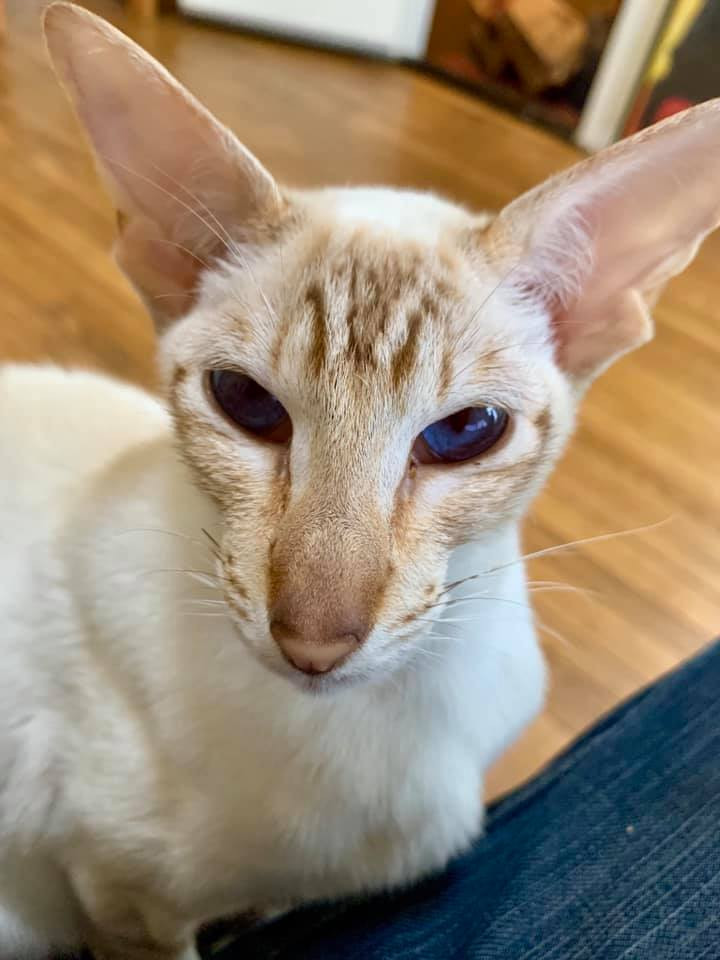
Cats retire for many reasons. They may have completed what I wanted from a line. Pregnancy may no longer be fair to them. Maternal behavior may make another litter unsafe. A health pattern may change the entire plan. Sometimes the answer is simply that enough is enough.
Retirement is not failure. It is a breeding decision with a cat attached.
The cat does not become surplus
Spaying or neutering ends the reproductive job. It does not reduce the cat’s value or cancel years of care. The next question is what life suits that individual adult.
Some retirees stay here because this is plainly their home, because they are bonded to another cat, or because moving them would serve nobody but the breeder’s arithmetic. Others would be happier with fewer cats, more furniture, and humans whose chief responsibility is admiring them.
Adult placement is still matching
An adult is not a kitten with more mileage. The personality is clearer, the habits are established, and the opinions may have acquired procedural safeguards.
An adult’s established personality can make the match easier. I know whether the cat wants other cats, tolerates dogs, needs a quiet home, considers children entertaining, or regards closed doors as a personal attack. It also means the family must want the actual adult, not an imaginary kitten version with the same face.
The advantage of an adult is that the evidence has already entered the record.
Familiar is not always bonded
Cats who have lived together are not necessarily a package deal. Some are bonded. Some are roommates. Some have spent years preserving a diplomatic ceasefire and would welcome separate retirement plans.
I watch how they sleep, play, seek comfort, share space, and respond to separation. A pair should stay together because the cats need each other, not because a human caption once used the word “besties.”
The retirement process
The cat is altered and receives veterinary care appropriate to the individual before leaving. The prospective family needs the same honest conversation required for any placement: household, other animals, work schedule, veterinary plan, indoor life, transport, and what happens if circumstances change.
If the placement fails, the cat returns to me or moves through a plan I approve. Circumstances change; there is no shame in that. Moving the cat without involving me is another matter.
What a good retirement looks like
Charm moved from nursery work to the heating-pad years with complete confidence that all soft surfaces were hers. That is the model: comfort, attention, safety, and a household arranged around the cat’s actual character.
A retiree does not owe anyone kittens, ribbons, or gratitude. The breeder owes the retiree a life that makes sense after the work is done.