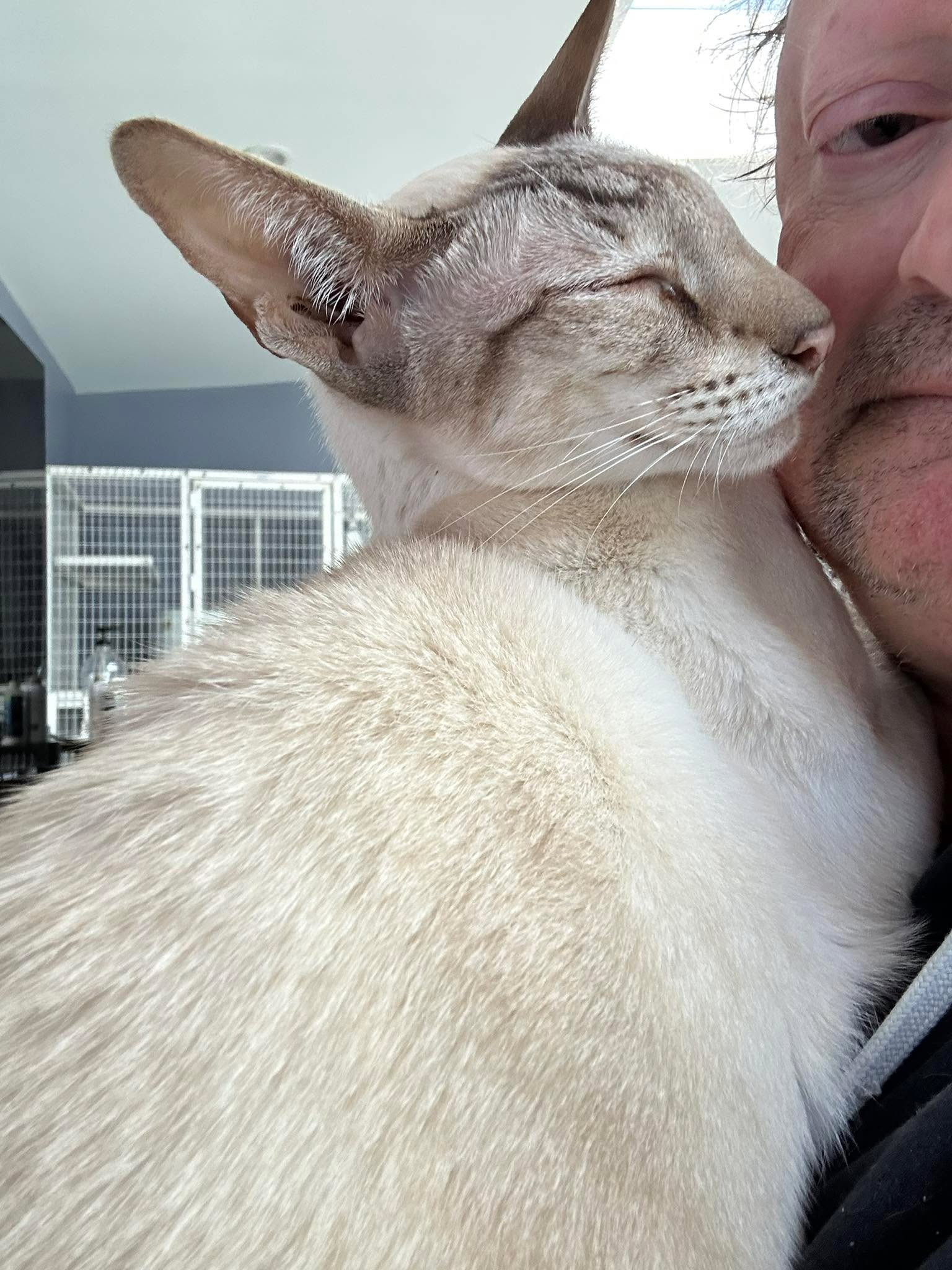
A picture is not yet a story
Beautiful cats are not rare on the internet. Cute kittens are certainly not rare. A picture can make somebody stop for a moment. It cannot, by itself, make somebody understand why the next picture matters.
Readers come back. They know the narrative.
The common factor is narrative investment. People are not merely looking at whichever kitten happens to be in front of the camera. They know the cast, remember what happened last week, and want the next chapter.
The cats become known
Emma is not a white cat with kittens. She is the excellent mother who requires three clean towels and will file her objection by carrying the kittens if the nursery is not maintained to code.
Naiche entered the story as Baby Oops: an unplanned pregnancy, a known prior pairing, one surviving kitten, no early reservation, a household audition, a new name, and finally a flight to Arizona.
Elf arrived carrying an entire survival narrative before third breakfast became the joke. Hobbes is not a red cat in an old photograph. He is the little emperor whose internal monologue was chicken, chicken, chicken, and whose absence still enters the room whenever I prepare it.
The names carry facts, expectations, running jokes, prior losses, and unresolved questions. That is what lets a photograph arrive with a history already attached.
Specificity creates memory
“Raised with love” is not a story. Three clean towels is a story. “Wonderful temperament” is not a story. A cat who reaches up on his hind legs and yells to be picked up is a story.
The details do not need to be grand. A cowlick that could not be trimmed without leaving a bald spot survived in the family record for almost half a century. A kitten leaving for Arizona held an audience because people had watched him become a particular kitten rather than a unit of availability.
A cat photograph attracts attention. A story teaches people how to care about the next photograph.
A serial story requires consequences
If every appearance resets to “look, kitten,” there is nothing to remember. The story accumulates because an earlier observation changes a later decision.
Naiche could not be reserved because he was not ready. His personality emerged. Applications were considered. A family was selected. The name changed. He left. Then the family’s photographs continued the story from another state.
Emma’s towel requirements are funny because they are real, specific, and consequential. A joke about boutique-hotel linens sits on top of the serious fact that knowing one queen’s private requirements keeps her kittens safe.
Losses remain in the narrative because the next breeding decision would be dishonest without them. Show wins remain because they explain the standard being pursued. Placements remain because the cat does not cease to exist when it leaves my house.
The audience becomes part of the continuity
The kitten families send photographs, answer questions about how the cats age, and allow the life after departure to remain part of the record. Regular readers remember old cats, notice family resemblances, ask what happened, and recognize a returning character before I explain.
Some become kitten families. Some refer better families. Some learn enough about Oriental Shorthairs to decide they do not want one, which is also a successful educational outcome.
They come back because the story did not end with the last photograph.
The trained writer is the common factor
The cats supply beauty, personality, jeopardy, absurdity, and grief. The writing selects the meaningful detail, establishes the stakes, remembers the earlier chapter, and gives the next event somewhere to land.
That is not a trick for manufacturing attention. It is the work of turning repeated observation into narrative continuity and letting an audience become invested in lives unfolding over time.
The cats are the subject. The trained writer is the common factor.