Does grief become manageable with time? Sure. Does grief ever really go away? No. It just becomes an aspect of who you are.
Every breeder loses kittens
Every Oriental Shorthair breeder—and, for that matter, every cat breeder—loses kittens.
When I make a crisis public as it unfolds, the account is about that kitten: what happened, what I thought at the time, what veterinarians and other breeders advised, and how uncertain the result remained.
If you read one of those stories, read it as a case history. The medical details belonged to a particular animal, weight, diagnosis, veterinarian, and date. They are not treatment instructions for the next kitten.
Sometimes there is no satisfying answer
When Pipsqueak died, I wrote: “No, we don’t really know what happened to the pipsqueak and it’s devastating.”
I had spent days trying to get him through weaning. Other Oriental Shorthair breeders—with more than 120 years of combined breeding experience—spent hours in chat and on the phone with me. Nothing was attempted or not attempted without input from my colleagues.
He did not rally. I was physically nauseated upset.
Would it have worked? No idea, but I try to fight death with everything I have even if death usually wins.
Miss Mouse changed the breeding question
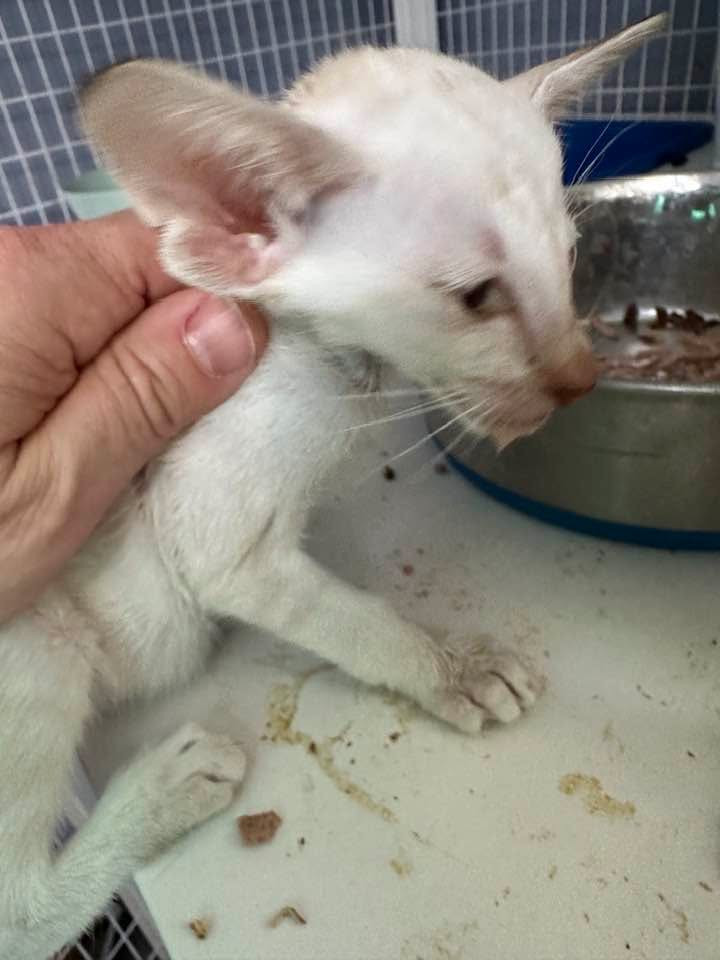
Miss Mouse was a beautiful living creature with a life that was too brief. Filled with love and warmth and food and comfort, but unacceptably short.
She loved to climb my pants leg after breakfast to say hello. She was tiny but very committed to toddling around after her siblings even when they kept getting bigger and she stalled out.
It is true that kitten mortality is part of working with cats. It is also true that my species—ostensibly Homo sapiens—is designed to protect infants at all costs. My instincts and beliefs don’t let me shrug off these deaths.
I told Mrs. UltraVires that I hated this hobby and I think every good breeder does sometimes.
If dying kittens don’t bother you, then quit. It’s not about show titles. It’s not about the money. It’s about the cats.
Hobbes did not become a lesson instead of a cat
Hobbes received around-the-clock specialty care, hospitalization, surgery, and every reasonable chance I could buy him. There were days when I sat beside him talking and petting him, looking for a sign of improvement and wishing there were a magic wand.
He still died. His ashes came back overnight. I really missed him. I still do.
A case may change sanitation, testing, quarantine, line selection, or the threshold for seeking specialty care. That does not retroactively make the animal a useful experiment. Hobbes was Hobbes first.
The change has to reach the next decision
When my mother was breeding in the 1980s, we seldom lost kittens. I can remember a few that just weren’t viable at birth, but this sort of failure to gain wasn’t much of a thing.
Many early Oriental Shorthairs were severely line bred. Breeders saw a trait they liked—us too, not innocent here—and we line bred. We got the big ears, silver coats, and refinement, but we locked in other genes too.
After Miss Mouse, I found myself thinking more and more that we were not being responsible by keeping and breeding the bat-eared, almost skeletal kittens. We ought to work with cats who are very good and who thrived as kittens.
Loss has been the reason to retire cats, end lines, acquire new genetics, refuse early reservations, compare notes with other breeders, and keep asking families for the good news and the bad.
Grief that changes nothing is only grief. The obligation is to let the record change the next decision.