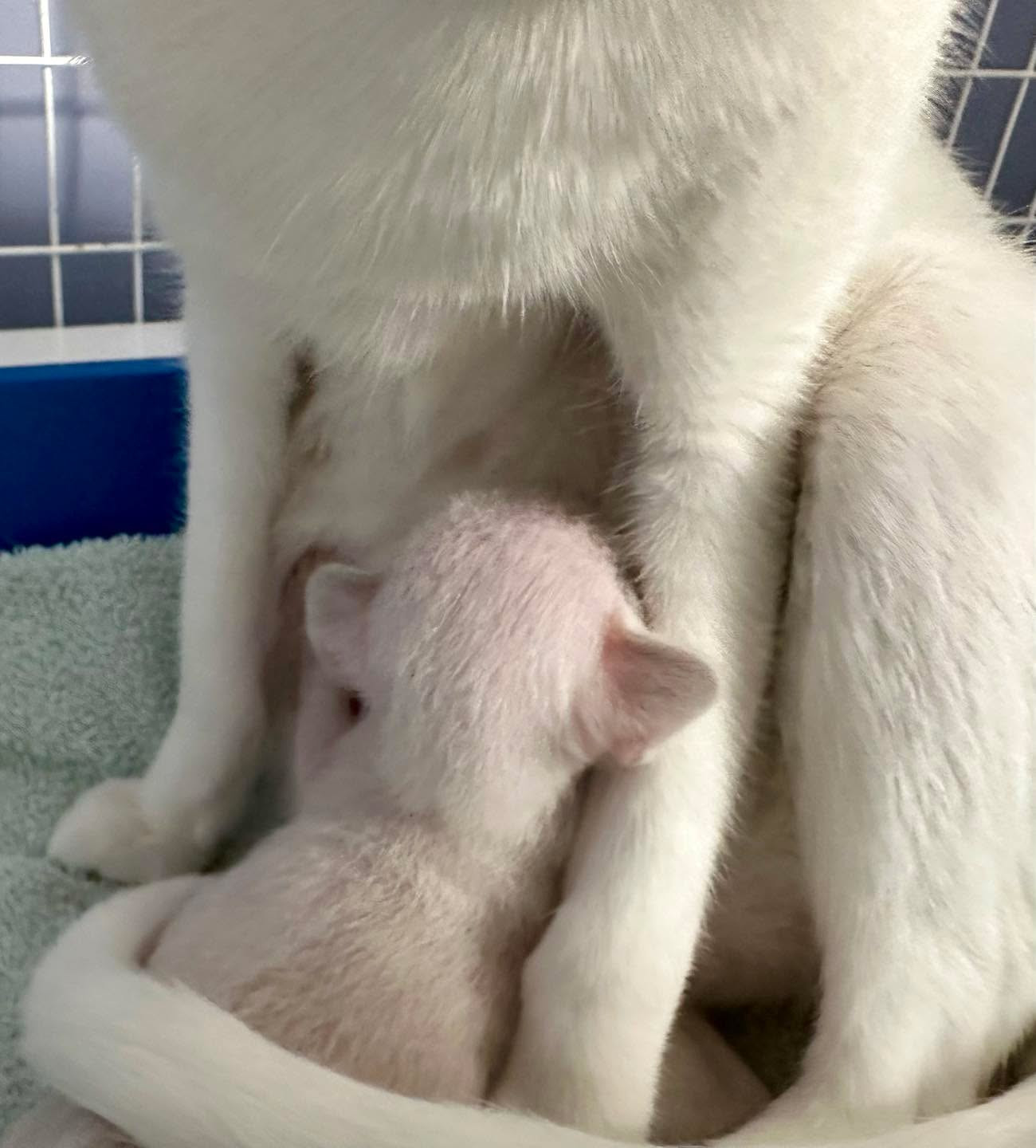
The sire contributes half the genetics. The queen contributes the other half, then carries the pregnancy, delivers the litter, cleans the kittens, supplies the milk, regulates the nest, and teaches the first lessons in being a cat. Treating maternal behavior as backstage housekeeping misses half the breeding program.
The show ring cannot judge a nursery
A judge can evaluate the cat presented that day. The judge cannot evaluate whether she labors cleanly, settles after delivery, accepts sensible human help, produces enough milk, keeps the kittens clean, or decides at 2 a.m. that the nursery must be relocated by the neck.
A title does not nurse kittens at 2 a.m.
Type matters. Temperament matters. Health matters. So do fertility, delivery, milk, stable maternal behavior, and the ability to recover without turning the entire household into a neonatal command center.
Good is not the same as easy
Some queens are excellent mothers under very particular conditions. That does not make them bad mothers. It does make their requirements part of the record.
Emma is attentive, patient, and devoted to her kittens. She is also convinced that nest linens are a constitutional issue. Her litters are manageable because I work at home, know her cues, and can meet her standards before she starts moving kittens.
That distinction matters. A cat can be maternally competent and difficult to delegate. Human availability is a real breeding cost even though nobody puts it on a pedigree.
The queen who makes everyone better
At the other end of the management spectrum was Charm. She delivered cleanly, settled easily, had milk, and would nurse kittens who were not hers. Put kittens near Charm and she handled the merger without requiring outside counsel.
A queen like that improves more than her own litter. She gives another queen time, gives a struggling kitten a chance, and occasionally gives the breeder an hour of sleep. That is breeding value no ribbon can summarize.
Beauty does not excuse danger
If a female repeatedly cannot mother safely, the answer may be to spay her even if she is beautiful and genetically interesting. That is not punishment. It is selection.
One successful intervention does not convert a dangerous pattern into a desirable trait. Nor does one difficult delivery condemn every queen. The whole record controls: what happened, whether it repeated, what the veterinarians found, how the kittens did, and whether continuing would be fair to the cat.
Breeding quality includes what happens after the ribbons come down.
The invisible inheritance
Not every useful trait arrives on a laboratory report. Maternal behavior is observed across litters and generations. So are fertility, ease of delivery, milk production, kitten vigor, and the ability to tolerate ordinary nursery management without declaring a state of emergency.
None of that makes a breeder omniscient. It does make attention mandatory. A breeding program that selects only the photograph and the pedigree has left the nursery out of the decision.